STILLWATER, Okla. (May 18, 2026) —
Researchers working across Oklahoma have found new ways to predict some types of extreme weather up to two weeks in advance. These findings could help protect the state’s power systems, farms and communities.
The research is part of a five‑year project called Socially Sustainable Solutions for Water, Carbon, and Infrastructure Resilience in Oklahoma (S3OK). Scientists recently shared their work in a new chapter titled “Subseasonal to Seasonal Weather Patterns.”
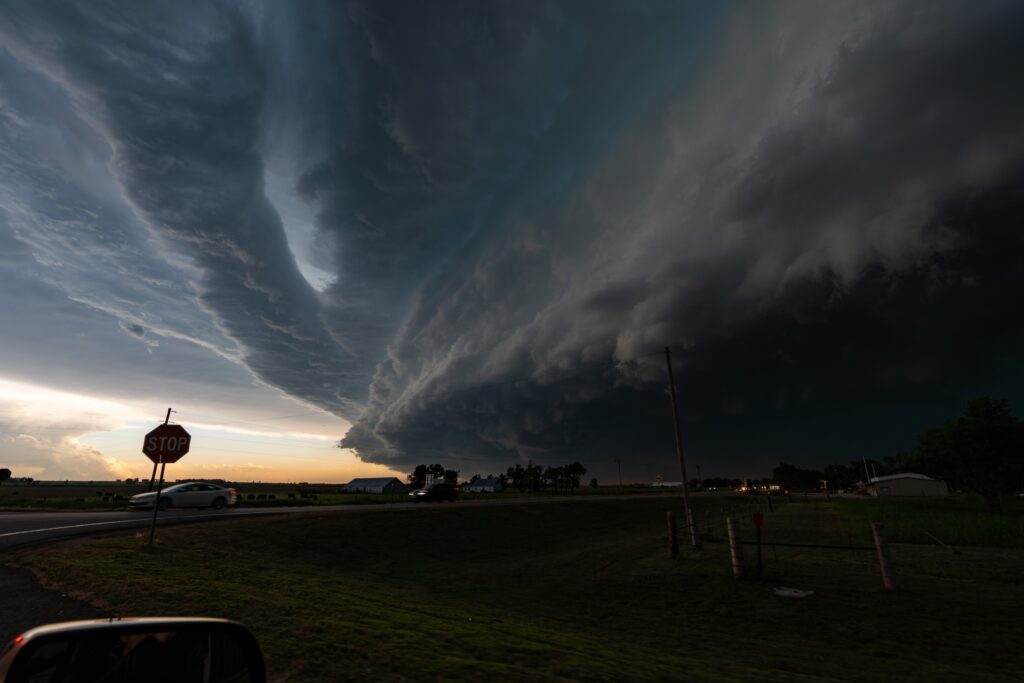
Oklahoma has some of the most extreme and fast‑changing weather in the country. The state often faces severe storms, cold snaps, heat waves and sudden shifts in temperature and rain. These changes are difficult to predict. They can damage power lines, hurt crops and strain water supplies.
The research team focused on “subseasonal to seasonal” (S2S) forecasting such as sudden shifts in temperature and rainfall, often called “whiplash events.” These events can lead to wildfires, flash floods and droughts. These can cause decreased water quality, power outages and losses for farmers.
“The S2S timescale lies in a ‘predictability desert,’” the chapter says. “That is, the time frame starts at the end of the more traditional weather models used for forecasting (out to 10 days) but ends short of seasonal (3-9 months) timescales, where signals from the ocean and land offer good prediction skill at those times. S2S forecasting represents the ‘new frontier’ in forecasting.”
The researchers worked closely with leaders in energy, farming and utilities to make sure the science would address practical needs. Their findings include:
— Finding conditions that lead to cold-air outbreaks up to 14 days ahead of time. This gives energy providers and emergency planners more time to prepare
— Finding how flash droughts before and during the planting of some crops can greatly reduce crop yields
— Understanding the ways heavy rain can increase wildfire risk months later by growing more vegetation that later dries out
— Creating a first-of-its-kind database of cold-air outbreaks for the Central U.S., back to 1950 and identifying weather patterns that lead to these outbreaks.
The overall goals of the S³OK project are to develop socially sustainable solutions for water, land use and infrastructure systems in Oklahoma. The S2S team’s contributions support these goals with:
— Earlier forecasting for cold-air outbreaks, heat waves and temperature whiplash events
— Improved energy demand forecasting, particularly in vulnerable areas of the power grid
— Providing decision-makers with practical insights to manage the impacts of extreme temperature swings
The S³OK project is a collaboration between researchers at the University of Oklahoma, Oklahoma State University, Langston University, Southwestern Oklahoma State University, the University of Tulsa, East Central University and the Noble Research Institute. Funding was provided by a $20 million grant from the National Science Foundation and generous $4 million support from the Oklahoma State Regents for Higher Education, administered through the Oklahoma Established Programs to Stimulate Competitive Research (OK EPSCoR).
###
The “Subseasonal to Seasonal Weather Patterns” chapter is available at: https://shareok.org//handle/11244/342360
This material is based on work supported by the U.S. National Science Foundation under Grant No. OIA-1946093. Any opinions, findings, and conclusions or recommendations expressed in this material are those of the author(s) and do not necessarily reflect the views of the U.S. National Science Foundation or Oklahoma State Regents for Higher Education.