STILLWATER, Okla. (May 18, 2026) —
Oklahoma faces growing challenges to its water supplies. Many communities depend on lakes and underground water sources that are already under pressure due to population growth, drought and aging infrastructure. A new case study shows how Oklahoma cities can better manage water by using natural systems, like wetlands, with traditional water treatment technology.
The case study, titled “Exploration of Hybrid Treatment and Reuse Alternatives for Wastewater and Stormwater in a Municipal Context: An Oklahoma Case Study and Resource Guide,” focuses on how cities can safely clean and reuse wastewater and stormwater to stretch limited water supplies. Researchers at OU’s Center for Restoration of Ecosystems and Watersheds worked with the City of Norman to conduct the research.
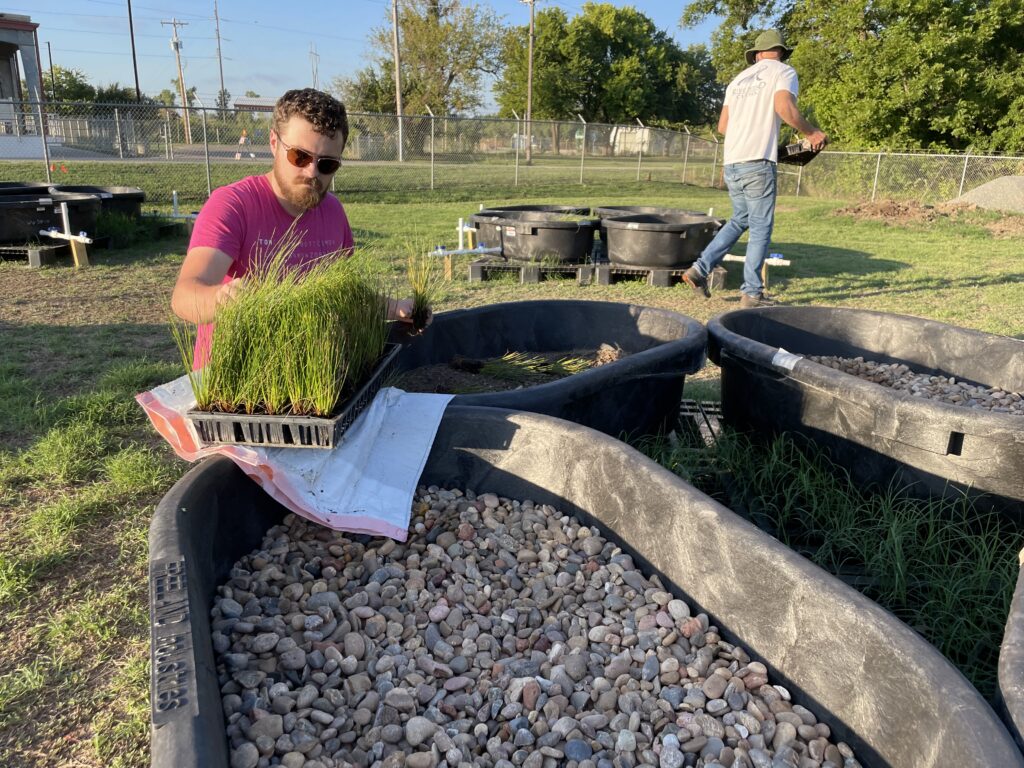
The study looked at hybrid water treatment systems that combine standard treatment plants with wetlands designed to mimic natural environments. The wetlands act as passive systems that help remove pollutants using natural processes.
Researchers tested these wetland systems to see how well they removed common pollutants as well as newer chemicals found in wastewater. The results showed that wetlands can play an important role in cleaning water when used alongside traditional treatment methods.
“Oklahoma practitioners should continue seeking creative solutions that utilize all available tools – including passive, hybrid, and advanced conventional treatment technologies – to implement practical water reuse and treatment that augment their local drinking water supply,” says the case study.
The findings support goals set by the Oklahoma Comprehensive Water Plan.
The case study is a part of the larger five-year project called Socially Sustainable Solutions for Water, Carbon & Infrastructure Resilience in Oklahoma (S³OK). The project used data collection, experiments and collaborations between scientists, city leaders and engineers from across Oklahoma to find real-world solutions to water-availability challenges.
The Socially Sustainable Solutions for Water, Carbon, and Infrastructure Resilience in Oklahoma (S3OK) project is a collaboration between researchers at the University of Oklahoma, Oklahoma State University, Langston University, Southwestern Oklahoma State University, the University of Tulsa, East Central University and the Noble Research Institute. Funding was provided by a $20 million grant from the National Science Foundation and generous $4 million support from the Oklahoma State Regents for Higher Education, administered through the Oklahoma Established Programs to Stimulate Competitive Research (OK EPSCoR).
###
The “Exploration of Hybrid Treatment and Reuse Alternatives for Wastewater and Stormwater in a Municipal Context: An Oklahoma Case Study and Resource Guide” chapter is available at: https://shareok.org//handle/11244/342359
This material is based on work supported by the U.S. National Science Foundation under Grant No. OIA-1946093. Any opinions, findings, and conclusions or recommendations expressed in this material are those of the author(s) and do not necessarily reflect the views of the U.S. National Science Foundation or Oklahoma State Regents for Higher Education.