Press for Oklahoma NSF EPSCoR

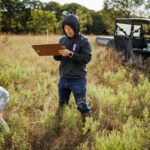
5 years, 7 institutions, nearly 100 researchers, 1 goal: Solving Oklahomas environmental challenges
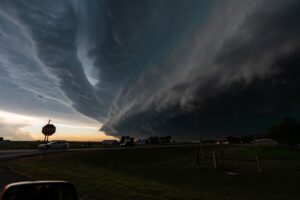
Oklahoma researchers offer insights into planning for severe weather
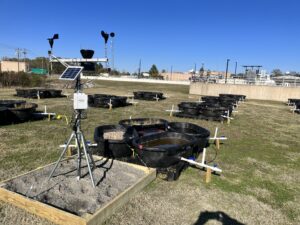
Research collaboration shows nature and technology work together to protect Oklahoma’s water supplies
Oklahoma researchers advance produced-water reuse technology to combat water scarcity
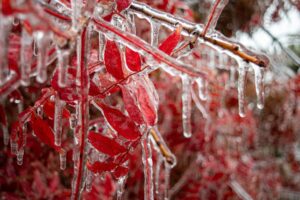
Researchers and electric cooperatives team up to strengthen Oklahoma’s power grid
Top undergraduate students present their research to Oklahoma legislators at Research Day at the Capitol


Press Release

ATTN: ALL SCIENTIFIC RESEARCH, CLIMATE and ECOLOGY MEDIA PERSONNEL

For Immediate Release

5 years, 7 institutions, nearly 100 researchers, 1 goal: Solving Oklahomas environmental challenges


STILLWATER, Okla. (May 19, 2026) —  

Oklahoma faces many environmental problems. These include less fresh water, extreme weather patterns, lower soil health and dealing with wastewater from oil and gas development. These problems are complex and connected.

A new report titled “Oklahoma’s Wicked Problems: A Framework for Socially Sustainable Solutions for Water, Land Use, and Infrastructure” shares new ways to solve these problems. Almost 100 researchers from across the state worked on the project. The project is called “Socially Sustainable Solutions for Water, Carbon, and Infrastructure Resilience in Oklahoma,” known as S³OK.

Researchers call these issues “wicked problems” because they are complex and do not have permanent answers. This research focused on Oklahoma, but the Framework can also help other states that face similar problems.

“The Framework itself does not prescribe fixed answers,” said Maggie Leόn-Corwin, a research scientist on the S³OK project. “Instead, it presents an outline of the S³OK approach: an adaptive, incremental approach designed to hold up across shifting political, economic and environmental conditions.”

One thing that makes S³OK different is how it incorporates public and practitioner perspectives. Instead of doing research first and sharing it later, the team regularly included insights from the public, industry leaders and scientific experts. They relied on three statewide groups:

— M‑SISNet Public Panel – A survey of roughly 2,000 Oklahoma households to learn what people care about and what solutions they support

— Opinion Leader Advisory Network – Over 70 leaders from government, business and nonprofits who gave advice on policy ideas

— Extended Peer Science Advisory Network Nearly 100 scientists from a wide range of disciplines who conducted needed research and shared expert knowledge


This helped ensure the research focused on solutions that people need and support. The project’s findings, detailed in more than 200 published peer-reviewed journal articles, include:

—  Building the first database of cold-air outbreaks for the Central U.S.

—  Recovering rare earth elements, like lanthanum, from water using modified silica particles

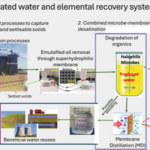
—  Cleaning ‘produced water’ from the oil and gas industry with advanced membrane distillation

—  Finding new ways to purify wastewater through small wetland systems called mesocosms

—  Improving emergency planning for the power grid by mapping wildfire risks and other hazards


The S³OK project is a collaboration between researchers at the University of Oklahoma, Oklahoma State University, Langston University, Southwestern Oklahoma State University, the University of Tulsa, East Central University and the Noble Research Institute. Funding was provided by a $20 million grant from the National Science Foundation and generous $4 million support from the Oklahoma State Regents for Higher Education, administered through the Oklahoma Established Programs to Stimulate Competitive Research (OK EPSCoR).

###


This material is based on work supported by the U.S. National Science Foundation under Grant No. OIA-1946093. Any opinions, findings, and conclusions or recommendations expressed in this material are those of the author(s) and do not necessarily reflect the views of the U.S. National Science Foundation or Oklahoma State Regents for Higher Education.

Assets 

“Oklahoma’s Wicked Problems: A Framework for Socially Sustainable Solutions for Water, Land Use, and Infrastructure”

Chapter is available at: https://shareok.org//handle/11244/342367


Expert science contacts:
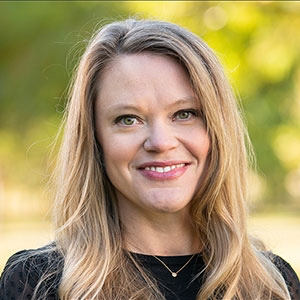
Nina Carlson, MPA, CRA

Research Practitioner

Deputy Director for Operations

Institute for Public Policy Research & Analysis (IPPRA)

The University of Oklahoma

(405) 325-6390

ninacarlson@ou.edu

Nina Carlson is a Research Practitioner and Deputy Director for Operations at the Institute for Public Policy Research and Analysis at the University of Oklahoma. During the S³OK project, she led coordination of the Opinion Leader Advisory Network (OLAN) and the Novel Hybrid Treatment and Reuse Options Working Group,  bridging research and practice in both.

 

Maggie Leόn-Corwin, Ph.D.

Research Scientist I

Institute for Public Policy Research & Analysis (IPPRA)

University of Oklahoma

(405) 325-1720

Maggie.leoncorwin@ou.edu

Maggie León-Corwin is a sociologist and research scientist at the Institute for Public Policy Research and Analysis at the University of Oklahoma, where she played a key leadership role in bringing the National Science Foundation-funded Socially Sustainable Solutions for Water, Land Use, and Infrastructure in Oklahoma (S³OK) Framework to fruition. Her work centers on human–environment interactions under challenging climate conditions, with a strong focus on interdisciplinary, applied and use-inspired research that benefits society and those most impacted by environmental challenges.


Media contact:

Honey D. H. Bryan

Outreach Coordinator

Oklahoma EPSCoR

(405) 744-7645

hbryan@okepscor.org

Photos

Press Release

ATTN: ALL SCIENTIFIC RESEARCH, METEOROLOGY, CLIMATE and ECOLOGY MEDIA PERSONNEL

For Immediate Release


Oklahoma researchers offer insights into planning for severe weather


STILLWATER, Okla. (May 19, 2026) —  

Researchers working across Oklahoma have found new ways to predict some types of extreme weather up to two weeks in advance. These findings could help protect the state’s power systems, farms and communities.

The research is part of a five‑year project called Socially Sustainable Solutions for Water, Carbon, and Infrastructure Resilience in Oklahoma (S³OK). Scientists recently shared their work in a new chapter titled “Subseasonal to Seasonal Weather Patterns.”

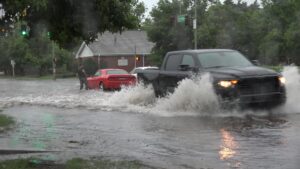
Oklahoma has some of the most extreme and fast‑changing weather in the country. The state often faces severe storms, cold snaps, heat waves and sudden shifts in temperature and rain. These changes are difficult to predict. They can damage power lines, hurt crops and strain water supplies.

The research team focused on “subseasonal to seasonal” (S2S) forecasting such as sudden shifts in temperature and rainfall, often called “whiplash events.” These events can lead to wildfires, flash floods and droughts. These can cause decreased water quality, power outages and losses for farmers.

“The S2S timescale lies in a ‘predictability desert,’” said Dr. Jason Furtado, a lead author on the chapter, “That is, the time frame starts at the end of the more traditional weather models used for forecasting (out to 10 days) but ends short of seasonal (3-9 months) timescales, where signals from the ocean and land offer good prediction skill at those times. S2S forecasting represents the ‘new frontier’ in forecasting.”  

The researchers worked closely with leaders in energy, farming and utilities to make sure the science would address practical needs. Their findings include:

— Finding conditions that lead to cold-air outbreaks up to 14 days ahead of time. This gives energy providers and emergency planners more time to prepare

—  Finding how flash droughts before and during the planting of some crops can greatly reduce crop yields

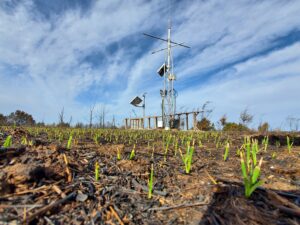
—  Understanding the ways heavy rain can increase wildfire risk months later by growing more vegetation that later dries out

—  Creating a first-of-its-kind database of cold-air outbreaks for the Central U.S., back to 1950 and identifying weather patterns that lead to these outbreaks


The overall goals of the S³OK project are to develop socially sustainable solutions for water, land use and infrastructure systems in Oklahoma. The S2S team’s contributions support these goals with:

—  Earlier forecasting for cold-air outbreaks, heat waves and temperature whiplash events

—  Improved energy demand forecasting, particularly in vulnerable areas of the power grid

—  Providing decision-makers with practical insights to manage the impacts of extreme temperature swings


The S³OK project is a collaboration between researchers at the University of Oklahoma, Oklahoma State University, Langston University, Southwestern Oklahoma State University, the University of Tulsa, East Central University and the Noble Research Institute. Funding was provided by a $20 million grant from the National Science Foundation and generous $4 million support from the Oklahoma State Regents for Higher Education, administered through the Oklahoma Established Programs to Stimulate Competitive Research (OK EPSCoR).

###


This material is based on work supported by the U.S. National Science Foundation under Grant No. OIA-1946093. Any opinions, findings, and conclusions or recommendations expressed in this material are those of the author(s) and do not necessarily reflect the views of the U.S. National Science Foundation or Oklahoma State Regents for Higher Education.

Assets

“Subseasonal to Seasonal Weather Patterns”

Chapter is available at: https://shareok.org//handle/11244/342360


Expert science contacts:

 

Dr. Jason Furtado, Ph.D.

Associate Professor

School of Meteorology

The University of Oklahoma

JFurtado@ou.edu

(405) 325-1391


Dr. Furtado’s work on the S³OK project addresses Changing Subseasonal to Seasonal (S2S) Weather Patterns. He has focused heavily on improving long-range prediction skill of extreme winter weather events across the Southern Plains, including cold air outbreaks and temperature whiplash events – i.e., episodes of rapid swings in temperature from hot to cold or vice versa. Additionally, his lab also connected electricity demand across the Southern Plains with specific atmospheric winter weather patterns and identified long-lead predictors for compound heatwave-drought events in the area.

 “Oklahoma is an area known for its highly variable and extreme weather. Our research in identifying the key predictors for these extreme weather events at long leads and quantifying how the frequency and intensity of extreme weather has changed over time are extremely beneficial for managing infrastructure and water resources across the state,” Furtado said.
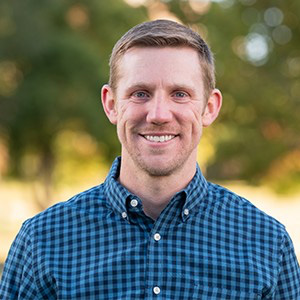


Dr. Joseph Ripberger, Ph.D.

Asst. Professor, Department of Political Science

Deputy Director for Research

Center for Risk & Crisis Management

University of Oklahoma

(405) 325-5872

JTR@ou.edu


Dr. Ripberger’s research focuses on risk and public policy with an emphasis on weather, climate and water policy. Human perceptions and beliefs are at the heart of the most critical challenges facing Oklahoma. They shape behaviors and collective decisions, and therefore our responses to the changing world. Using data from the M-SISNet, the social dynamics team (a) measured and modeled perceptions and beliefs underpinning the social narratives that shape debates among the public, opinion leaders and scientists about the emerging, interconnected and salient threats to Oklahomans identified in our research focus areas; (b) evaluated how widely shared narratives have undermined collective action to pursue convergent solutions to wicked problems that recognize and address the array of anthropogenic drivers of these threats; and (c) measured social valuation for solutions using willingness-to-pay for potential sustainable solutions.


Media Contact:

Honey D. H. Bryan

Outreach Coordinator

OK NSF EPSCoR

(405)762-3301

hbryan@okepscor.org


Photos
 

Press Release

ATTN: ALL SCIENTIFIC RESEARCH, METEOROLOGY and ECOLOGY MEDIA PERSONNEL

For Immediate Release


Research collaboration shows nature and technology work together to protect Oklahoma’s water supplies


STILLWATER, Okla. (May 19, 2026) — 

Oklahoma faces growing challenges to its water supplies. Many communities depend on lakes and underground water sources that are already under pressure due to population growth, drought and aging infrastructure. A new case study shows how one city in Oklahoma is making progress toward water supply management strategies that blend natural systems, like wetlands, with traditional water treatment technology.

The case study, titled “Exploration of Hybrid Treatment and Reuse Alternatives for Wastewater and Stormwater in a Municipal Context: An Oklahoma Case Study and Resource Guide,” discusses how the city of Norman worked collaboratively with researchers to explore opportunities to safely clean and reuse wastewater and stormwater to stretch limited water supplies. Researchers at OU’s Center for Restoration of Ecosystems and Watersheds worked with the City of Norman to conduct the research.

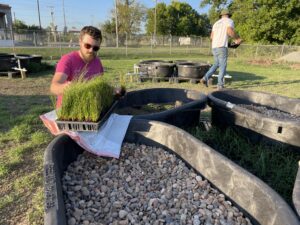
The study explored the potential for hybrid water-treatment systems that combine standard treatment plants with wetlands designed to mimic natural environments. The wetlands act as passive systems that help remove pollutants using natural processes.

Researchers tested these wetland systems to see how well they removed common pollutants as well as newer chemicals found in wastewater. The results showed that wetlands can play an important role in cleaning water when used alongside traditional treatment methods.

“We encourage Oklahoma practitioners to continue seeking creative solutions that utilize all available tools –including passive, hybrid, and advanced conventional treatment technologies – to implement practical water reuse and treatment that augment their local drinking water supply,” said Nina Carlson, lead author of the case study.

The case study is a part of the larger five-year project called Socially Sustainable Solutions for Water, Carbon & Infrastructure Resilience in Oklahoma (S³OK). The project used data collection, experiments and collaborations between scientists, city leaders and engineers from across Oklahoma to find real-world solutions to water-availability challenges.

The Socially Sustainable Solutions for Water, Carbon, and Infrastructure Resilience in Oklahoma (S3OK) project is a collaboration between researchers at the University of Oklahoma, Oklahoma State University, Langston University, Southwestern Oklahoma State University, the University of Tulsa, East Central University and the Noble Research Institute. Funding was provided by a $20 million grant from the National Science Foundation and generous $4 million support from the Oklahoma State Regents for Higher Education, administered through the Oklahoma Established Programs to Stimulate Competitive Research (OK EPSCoR).

###


This material is based on work supported by the U.S. National Science Foundation under Grant No. OIA-1946093. Any opinions, findings, and conclusions or recommendations expressed in this material are those of the author(s) and do not necessarily reflect the views of the U.S. National Science Foundation or Oklahoma State Regents for Higher Education.

Assets 

“Exploration of Hybrid Treatment and Reuse Alternatives for Wastewater and Stormwater in a Municipal Context: An Oklahoma Case Study and Resource Guide,” 

The chapter is available at: https://shareok.org//handle/11244/342359


Expert science contacts:


Nina Carlson, MPA, CRA

Research Practitioner

Deputy Director for Operations

Institute for Public Policy Research & Analysis (IPPRA)

The University of Oklahoma

(405) 325-6390

ninacarlson@ou.edu


Nina Carlson is a Research Practitioner and Deputy Director for Operations at the Institute for Public Policy Research and Analysis at the University of Oklahoma. During the S³OK project, she led coordination of the Opinion Leader Advisory Network (OLAN) and the Novel Hybrid Treatment and Reuse Options Working Group,  bridging research and practice in both.



Robert W. Nairn, PhD, BCES

Robert W. Hughes Centennial Professor

David L. Boren Professor

Viersen Presidential Professor

Center for Restoration of Ecosystems and Watersheds

School of Civil Engineering and Environmental Science

The University of Oklahoma

(405) 325-3354

nairn@ou.edu


Dr. Nairn’s work on the OK NSF EPSCoR project examines the passive treatment of variable and marginal water quality. Treatment wetland mesocosm experiments will be performed to evaluate natural mechanisms (e.g., photolysis, sorption, biodegradation) which address contaminants of emerging concern in municipal wastewater. His research addresses issues surrounding Oklahoma’s water demands, which are projected to increase 600,000 acre-feet per year between 2007-2060. However, freshwater supplies are declining due to reservoir sedimentation and groundwater overdraft and are increasingly vulnerable to S2S variability. Concurrently, volumes of oil and gas ‘produced water,’ municipal wastewater, and stormwater are increasing with continued oil and gas development and urbanization. The challenge is finding a mix of solutions that allow Oklahoma’s diverse array of MQW to be economically treated for beneficial use to address water scarcity related to changing seasonal to sub-seasonal weather patterns, waste disposal and infrastructure risk while supporting continued energy production and economic growth.


Media contact:

Honey D. H. Bryan

Outreach Coordinator

Oklahoma EPSCoR

(405) 744-7645

hbryan@okepscor.org


Photos

Press Release

ATTN: ALL SCIENTIFIC RESEARCH, OIL AND GAS INDUSTRY and ENVIRONMENT MEDIA PERSONNEL

For Immediate Release


Oklahoma researchers advance produced-water reuse technology to combat water scarcity


STILLWATER, Okla. (May 19, 2026) —

Oklahoma researchers have developed new ways to clean and reuse water produced during oil and gas drilling. This breakthrough could help protect the state’s water supply and reduce waste from energy production.

The research was part of a five‑year project called Socially Sustainable Solutions for Water, Carbon, and Infrastructure Resilience in Oklahoma (S³OK). University researchers worked with key decision makers and industry leaders like D&B Operating LLC to advance new, practical solutions. The team recently shared their findings in a new study titled “Enhancing Water Availability for Agricultural and Oilfield Applications.”

As Oklahoma grows, need for water is expected to rise 33 percent by 2060. Water use for oil and gas companies is expected to nearly triple by 2060, according to the “2012 Oklahoma Comprehensive Water Plan.”

At the same time, a major challenge of oil and gas production is the handling and disposal of produced water, which is the wastewater byproduct that exits the well during production. This water can contain high amounts of salt, chemicals and other pollutants.

“For every barrel of oil produced, nearly 9-10 barrels of PW [produced water]… are generated, totaling approximately 25 billion barrels per year in the US and 70 billion barrels globally,” said Dr. Mark Krzmarzick, a lead author on the study, “Oklahoma is a leading U.S. oil and gas producer, resulting in large amounts of water brought to the surface alongside oil and natural gas production.”

The S³OK team tested new methods that could make treatment easier and more affordable:

—  Reduced-chemical treatment — New methods to treat produced water using fewer chemicals, lowering cost and environmental impact

—  Rare-earth element recovery — Techniques to extract lanthanum, a rare-earth element, from produced water. This material is used in electronics and could turn waste into a valuable resource.

—  Bioremediation — Methods to remove dissolved hydrocarbons using microbes to break down pollutants naturally

—  Next-generation desalination — Showed that membrane distillation can handle produced water at virtually any salinity level when oils, hydrocarbons and other organic materials are removed beforehand


These advances bring produced-water reuse closer to reality. A pilot program focused on agricultural applications and rare-earth element recovery is now being planned.

Collaborators are also working to create a Produced Water Consortium in Oklahoma. The Consortium would help advance research and solutions statewide.

The S³OK project is a collaboration between researchers at the University of Oklahoma, Oklahoma State University, Langston University, Southwestern Oklahoma State University, the University of Tulsa, East Central University and the Noble Research Institute. Funding was provided by a $20 million grant from the National Science Foundation and generous $4 million support from the Oklahoma State Regents for Higher Education, administered through the Oklahoma Established Programs to Stimulate Competitive Research (OK EPSCoR).

###


This material is based on work supported by the U.S. National Science Foundation under Grant No. OIA-1946093. Any opinions, findings, and conclusions or recommendations expressed in this material are those of the author(s) and do not necessarily reflect the views of the U.S. National Science Foundation or Oklahoma State Regents for Higher Education.

Assets 

“Enhancing Water Availability for Agricultural and Oilfield Applications”

The chapter is available at: https://shareok.org//handle/11244/342358

Expert Science Contacts:

Dr. Mark Krzmarzick

Professor and Head

School of Civil and Environmental Engineering

Oklahoma State University

Mark.Krzmarzick@okstate.edu

(405) 744-9308


Dr. Krzmarzick’s research supported the project’s focus on Variable and Marginal Quality Water Supplies (V-MQW). The V-MQW Supplies focus area addressed issues surrounding Oklahoma’s water demands, which are projected to increase 600,000 acre-feet per year between 2007-2060. However, freshwater supplies are declining due to reservoir sedimentation and groundwater overdraft and are increasingly vulnerable to seasonal to subseasonal (S2S) variability. Concurrently, volumes of oil and gas ‘produced water,’ municipal wastewater and stormwater are increasing with continued oil and gas development and urbanization. Disposal of produced waters has been correlated with seismicity, potentially impacting infrastructure and resulting in energy production curtailment in some regions. The challenge is finding a mix of solutions that allow Oklahoma’s diverse array of MQW to be economically treated for beneficial use to address water scarcity related to changing seasonal to subseasonal weather patterns, waste disposal and infrastructure risk while supporting continued energy production and economic growth.


Sam Stormer

Research Associate II

Institute for Public Policy Research & Analysis (IPPRA)

The University of Oklahoma

SamStormer@ou.edu

(806) 570-5306 (cell)

(405) 325-5740 (work)

Sam Stormer served as the logistical and social science lead on the chapter “Enhancing Water Availability for Agricultural and Oilfield Applications” of the S³OK Framework. His work included meeting design and facilitation, M-SISNet question development and analysis, stakeholder outreach, chapter preparation and a wide range of supporting logistical efforts.


Media contact:

Honey D. H. Bryan

Outreach Coordinator

Oklahoma EPSCoR

(405) 744-7645

hbryan@okepscor.org


Photos

Press Release

ATTN: ALL INFRASTRUCTURE, PUBLIC POLICY, SCIENTIFIC RESEARCH, METEOROLOGY and ECOLOGY MEDIA PERSONNEL

For Immediate Release


Researchers and electric cooperatives team up to strengthen Oklahoma’s power grid


STILLWATER, Okla. (May 19, 2026) —

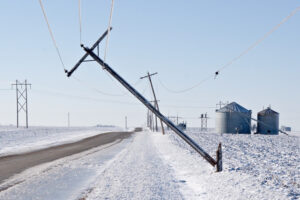
Ice storms, droughts, wildfires and other natural hazards put energy availability at risk for the more than 1.1 million customers of Oklahoma’s electric cooperatives. Scientists and industry leaders from across the state have studied how to make the power grid stronger in the face of these challenges, and they are making their results available to the public.

Researchers on the Socially Sustainable Solutions for Water, Carbon, and Infrastructure Resilience in Oklahoma (S³OK) project worked closely with the Oklahoma Electric Cooperative and Oklahoma Association of Electric Cooperatives to find practical solutions to these problems. Their findings are described in a newly released publication titled “Socially Sustainable Solutions for Natural Hazards and Utility Resilience.”

“What sets this work apart is its grounding in real-world conditions,” said Maggie Leόn-Corwin, a research scientist on the S³OK project, “These insights are essential for building systems that serve communities.”

S³OK researchers worked directly with utility professionals, agencies and emergency management professionals to understand the practical side of power-grid management. The team also used surveys of more than 2,000 Oklahoma residents to understand how ordinary people respond to utility disruptions.

These collaborations “create a foundation for innovative strategies that meet the demands of a rapidly changing energy landscape,” says Dr. K. K. “Muralee” Muraleetharan, the research leader who spearheaded the effort.

This research provides crucial resources for utility planners to predict threats and manage resources, including:

 —  Improving prediction skill for “cold-air outbreaks” across the Central U.S.

 —  Predicting peak power demand using subseasonal circulation patterns

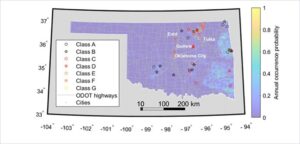
 —  Laying the groundwork for updated “hazard maps” for rural utility planning, integrating climate projections, wildfire risks and utility infrastructure vulnerabilities

 —  Creating detailed models to evaluate power distribution systems during ice storms, including factors such as falling limbs, ice accumulation and wind speed and direction

 —  Examining the reliability of electric distribution networks during “high-impact/low-probability events,” finding that traditional methods often fail to predict how the system will behave during extreme events

— Assessing the performance of the power grid before, during and after storms, and comparing the effectiveness of grid management strategies


The S³OK project is a collaboration between researchers at the University of Oklahoma, Oklahoma State University, Langston University, Southwestern Oklahoma State University, the University of Tulsa, East Central University and the Noble Research Institute. Funding was provided by a $20 million grant from the National Science Foundation and generous $4 million support from the Oklahoma State Regents for Higher Education, administered through the Oklahoma Established Programs to Stimulate Competitive Research (OK EPSCoR).

###


This material is based on work supported by the U.S. National Science Foundation under Grant No. OIA-1946093. Any opinions, findings, and conclusions or recommendations expressed in this material are those of the author(s) and do not necessarily reflect the views of the U.S. National Science Foundation or Oklahoma State Regents for Higher Education.

Assets 

“Socially Sustainable Solutions for Natural Hazards and Utility Resilience.”

The chapter is available at: https://shareok.org//handle/11244/341835


Expert science contacts:
 

K.K. "Muralee" Muraleetharan, Ph.D., P.E., G.E., F. ASCE

Dr. K.K. “Muralee” Muraleetharan, Ph.D., P.E., G.E., F. ASCE

Kimmell-Bernard Chair in Engineering

David Ross Boyd & Presidential Professor

School of Civil Engineering & Environmental Science

The University of Oklahoma

(405) 325-4247

muralee@ou.edu

Dr. Muraleethran’s research supported the project’s focus on Sustainable Infrastructure (SI). The SI focus area’s primary goal was to develop an aggregated resilience model to characterize the influence of diverse stakeholders’ decision-making behavior on the functions of interdependent infrastructure systems. Through the development of this model, Dr. Muraleetharan and his co-researchers in the SI focus group advanced understanding of the ways in which Oklahoma’s interdependent water, energy and transportation infrastructures interact with severe weather, S2S extremes (pluvial events and droughts), carbon cycle patterns (changing land use and increased frequency and scope of wildfires) and water management/reuse patterns . This understanding will facilitate the development of an array of solution options for enhancing the state’s infrastructure resilience that span the project focus areas (weather, water and carbon/land use), enabling socially sustainable solutions.

 

Dr. Paul Moses, PhD, SMIEEE

Gerald Tuma Presidential

Associate Professor

Director of the Power Quality & Resilience Laboratory (PQR-Lab)

School of Electrical and Computer Engineering

The University of Oklahoma

(405) 325-2969

pmoses@ou.edu

Dr. Moses’s research supports the project’s focus on Sustainable  Infrastructure (SI). His research studies electrical power generation, transmission, and distribution infrastructure and its resiliency and interdependencies in conjunction with other critical infrastructure such as transportation and water in Oklahoma. Dr. Moses’s research applies dynamic electrical network modeling of Oklahoma power systems to understand failure modes and contingencies coupled with severe weather and natural disasters, including the effects of volatile renewable energy sources.

 

Dr. Scott Harvey, PhD, PE, SE(OK)

President’s Associates Presidential Professor

Associate Professor

School of Civil Engineering & Environmental Science

Director, Donald G. Fears Structural

Engineering Laboratory

The University of Oklahoma

(405) 325-3836

harvey@ou.edu


Dr. Harvey’s research focuses on the behavior and resilience of infrastructure subject to natural hazards. More specifically, he is studying how we design, protect and maintain civil infrastructure and structural systems. His work supports the S³OK project’s focus on Sustainable Infrastructure (SI). The SI focus area’s primary goal was to develop an aggregated resilience model to characterize the influence of diverse stakeholders’ decision-making behavior on the functions of interdependent infrastructure systems. Through the development of this model, the SI focus area advanced understanding of the ways in which Oklahoma’s interdependent water, transportation and energy infrastructures interact with severe weather, S2S extremes (pluvial events and droughts), carbon cycle patterns (changing land use and increased frequency and scope of wildfires) and water management/reuse patterns.


Media contact:


Honey D. H. Bryan

Outreach Coordinator

Oklahoma EPSCoR

(405) 744-7645

hbryan@okepscor.org


Article

“Impact of Soil Moisture on the Response of Power Poles During Ice Storms” on page 56 of Geostrata magazine, February/March 2025. Geostrata magazine-Feb_Mar_2025


Photos
Press for Research Day at the Capitol

2026


OSU students compete at Research Day at the Capitol

https://news.okstate.edu/articles/communications/2026/osu-students-compete-at-research-day-at-the-capitol

SWOSU Chemistry Student Earns Second Place at Research Day at the Capitol

https://www.swosu.edu/news/?p=swosu-chemistry-student-earns-second-place-at-research-day-at-the-capitol

RSU senior wins 1st place in “Regional University” category at Research Day at the Capitol

https://www.fox23.com/news/rsu-senior-wins-1st-place-in-regional-university-category-at-research-day-at-the-capitol/article_6f25a920-ef4a-4df7-936f-e1fed3cba73c.html

OSU student helps rural, tribal communities with diabetes, influenza research

https://news.okstate.edu/articles/communications/2026/osu-student-helps-rural,-tribal-communities-with-diabetes,-influenza-research

RSU senior places first at Statewide Academic competition

https://www.claremoreprogress.com/news/rsu-senior-places-first-at-statewide-academic-competition/article_8c2b01e5-f429-4962-ab58-31fd7d9ae2a8.html

Rising Researcher: OSU student Blackburn pioneers new approach to fight infections
https://news.okstate.edu/articles/communications/2025/rising_researcher_osu_student_blackburn_pioneers_new_approach_to_fight_infections

ATTN: MEDIA PERSONEL
FOR IMMEDIATE RELEASE


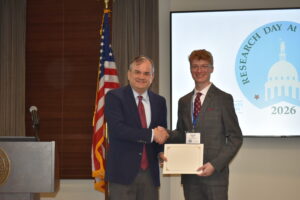
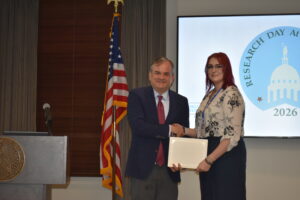
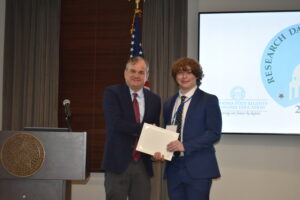
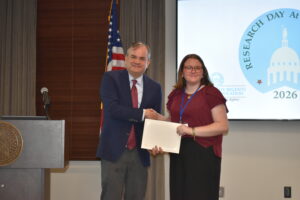
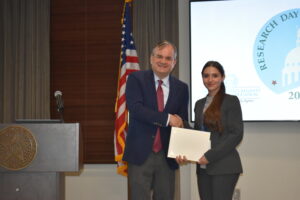
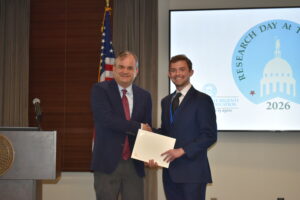
Top undergraduate students present their research to Oklahoma legislators at Research Day at the Capitol


Stillwater, Okla, (May 1, 2026)

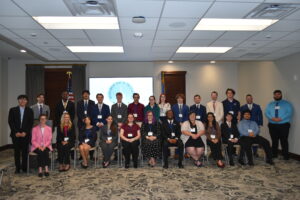
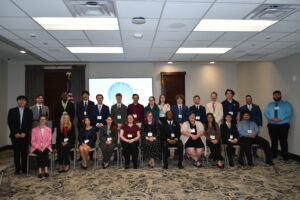
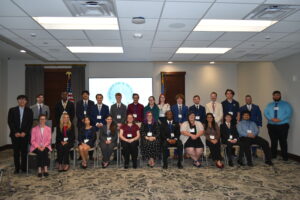
Legislators from across the state came together with Chancellor Sean Burrage of the Oklahoma State Regents for Higher Education to honor and learn from the 27 finalists in the 31st annual Research Day at the Capitol event on Tuesday at the Oklahoma Capitol Building.

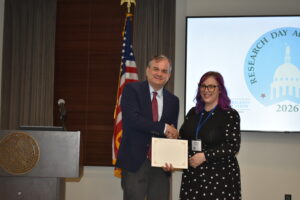
Hunter Helvey, a senior from Lawton, won the competition’s grand prize for a poster and presentation on his research, titled “Local Drug Delivery for Glioblastoma.” The grand prize includes a cash award and a summer internship to continue this research.

Ceyda Kara, Oklahoma State Universioty student from Stillwater, won first place in the Research-Intensive category. Kara’s research is on “Airflow Simulation.”

Micaiah Stowe, Rogers State University student from Skiatook, took 1st place in the Regional University category for her research on “Generational Views on Opioid Abuse and Stigma.”

Avery Glinsmann, a student of the University of Oklahoma from Yukon, took the second-place award in the Research-Intensive University category with a poster and presentation into their research, “Evaluation of Heterocyclic Cannabigerol Derivatives.”

Grant Elam, Southwestern State University student from Edmond, took second place in the Regional-University category. His research is on “Manganese Antioxidants for Health Protection”

Jacob McCormick, University of Tulsa student from Coweta, won third place in the Research-Intensive University category for his research on “Cabon Composite Coatings for Aerospace Applications.”

Rose State College undergraduate Shanisty Whittington, of Choctaw, won third place in the Regional University category of the event. Whittington’s research is on “Prison Gerrymandering and Oklahoma Voting Districts.”

The 27 finalists competed in a judged poster session on April 27. A panel of four scientists, each working in different field, chose the seven winners. Finalists in the competition presented their research posters at the Oklahoma Capitol building the next day.

Research Day at the Capitol was established 31 years ago to showcase the outstanding undergraduate research being conducted at Oklahoma’s colleges and universities to state legislators. Students present research in the areas of science (including social science), technology, engineering, and mathematics.

The prestigious event is sponsored by the Oklahoma State Regents for Higher Education, Oklahoma Established Program to Stimulate Competitive Research (OK EPSCoR) and the National Science Foundation.

###


Media Contact

Honey D. H. Bryan

Outreach Coordinator

Oklahoma EPSCoR

hbryan@okepscor.org

(405) 744-7645


This material is based on work supported by the U.S. National Science Foundation under Grant No. OIA-1946093. Any opinions, findings, and conclusions or recommendations expressed in this material are those of the author(s) and do not necessarily reflect the views of the U.S. National Science Foundation or Oklahoma State Regents for Higher Education.